
Dubai property for South Asian Americans raises the same questions as any overseas purchase, plus a few that come up often in family decisions: who owns the home, who inherits it, how to finance it in a way that fits your values, and how to move money in a clean, documented way. South Asian American families are not one group. They include Indian, Pakistani, Bangladeshi, Sri Lankan, Nepali and other communities, with different faiths, languages and plans. So this guide does not assume one profile. It covers the practical points that families tell us matter, and it marks where you need a lawyer.
Why do families look at Dubai property for South Asian Americans?
The reasons vary, but a few facts explain the interest. Estimates from 2024 and 2025 put Indians at roughly 38% of UAE residents, Pakistanis at about 17% and Bangladeshis at about 7%. Sources disagree on the exact numbers, and the UAE counts them differently, so treat them as approximate. The result is a city where South Asian food, languages, shops and community groups are easy to find.
- Distance. Dubai is a short flight, usually about three to four hours, from major South Asian cities. For families with relatives in the region, that matters.
- Places of worship. Dubai has a Sikh gurdwara, Guru Nanak Darbar, in the Jebel Ali worship village, along with Hindu temples and many churches. The BAPS Hindu Mandir opened in Abu Dhabi in February 2024. Mosques serve neighbourhoods across the emirate.
- Schools. Many Dubai schools follow the Indian CBSE curriculum, alongside British, American and International Baccalaureate schools. Check the current list and ratings with Dubai’s education regulator, KHDA.
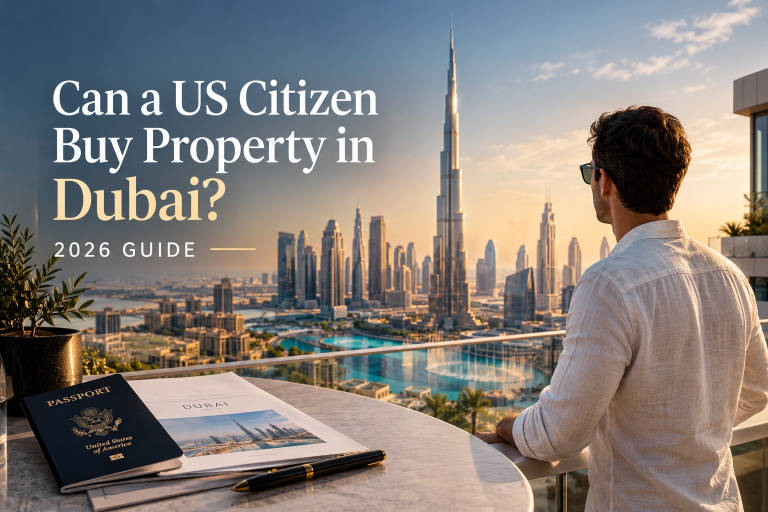
However, familiarity is not a legal difference. The buying rules are the same for every foreign buyer, and our guide for US citizens buying property in Dubai covers them.
Dubai property for South Asian Americans at a glance
| Question | Short answer |
|---|---|
| Does heritage or faith change who can buy? | No. Foreign buyers, including US citizens, can buy freehold property in designated areas |
| Can parents, spouses or siblings own together? | Yes. Each owner’s name and share go on the title deed, so agree the shares in writing first |
| What happens to the property when an owner dies? | Without a registered will, UAE succession rules based on Sharia can apply. Non-Muslims can register a will to choose their own rules |
| Is Sharia-compliant financing available? | Yes, from Islamic banks, including some non-resident products with stricter terms |
| Does owning in Dubai change my US taxes? | No. US citizens owe US tax on worldwide income, and home-country rules are separate |
How do you buy Dubai property for South Asian Americans with family?
Many families buy with a spouse, parents or siblings. That works well when you plan it. The title deed shows each owner and their percentage share, and the shares decide who can sell, who receives rent and who has a legal claim. Informal arrangements, such as one name on the deed while several people pay, can cause serious disputes later.
- Write down the deal. Agree who contributes what, who manages the property and what happens if one owner wants to sell. A lawyer can turn this into a co-ownership agreement.
- Match the title to the money. Put the shares on the deed in line with what each person actually pays.
- Prepare the paperwork for gifts. If relatives help with the purchase, banks and the Dubai Land Department expect to see where the money came from. Keep bank statements and a short written record.
- Think about visas. Reports say a 2-year investor visa can need AED 400,000 per co-owner, and the 10-year Golden Visa has its own test. Rules differ between sources, so read our Golden Visa guide for Americans before you structure shares around a visa.
If a relative in South Asia will act for you, use a special power of attorney limited to one property, and read our remote buying guide first.
What happens to a Dubai home when the owner dies?
This is the point families most often overlook. Sources explain that UAE Federal Law No. 28 of 2005 applies Sharia succession principles to the estate of a person who dies owning property in the UAE, whatever their nationality or religion, unless a valid will says otherwise. Without a will, the law divides the property among specific relatives in fixed shares. That may not match what a US or South Asian family expects.
Non-Muslim owners can usually register a will in Dubai that applies their own rules. The DIFC Wills Service Centre, set up in 2015, registers wills in English. The Dubai Courts also keep a register of non-Muslim wills, and its wills are drafted in Arabic. Registration generally requires a named executor and two witnesses. A DIFC will can also name guardians for minor children in the UAE.
- A will you signed in the US may not control a Dubai property, so ask a UAE lawyer how to coordinate the two.
- Sources disagree on whether a DIFC will covers assets outside Dubai, and on the details of recent laws. Confirm the current rules with the DIFC Wills Service Centre or the Dubai Courts.
- Muslim owners should also take advice on how Sharia succession interacts with a US estate plan and any property in other countries.
Can you get Sharia-compliant home finance for Dubai property?
Yes. The UAE has Islamic banks, including Dubai Islamic Bank, Emirates Islamic and Abu Dhabi Islamic Bank, and some conventional banks run Islamic windows, such as ADCB Islamic Banking. Their home finance uses structures that avoid interest:
- Ijara. The bank buys the property and leases it to you. You pay rent-like instalments, and ownership transfers when you finish.
- Murabaha. The bank buys the property and sells it to you at an agreed mark-up, which you pay in instalments.
- Musharaka. You and the bank share ownership, and you buy out the bank’s share over time.
Non-residents can qualify, but the terms are tighter. ADCB’s FAQ, for example, says eligible non-residents need a savings account with the bank, must take its life Takaful cover, and get a maximum term of 15 years, compared with 25 for residents. Broker estimates put non-resident deposits at 25% to 50% or more. Terms change and differ by bank, so ask each one for its current criteria.
Also ask for the structure and its Sharia board approval in writing. Do not assume a product is compliant because of its name. Developer payment plans are another route, since many do not list a separate interest charge on the instalments, but check the contract wording and ask your own scholar if it matters to you. Our financing guide for US citizens and our guide to off-plan payment plans explain the options.
How do you move money safely when you buy Dubai property for South Asian Americans?
- Use regulated channels. Send funds by bank wire or a licensed provider, to the escrow or trustee account named in your signed contract.
- Avoid informal transfers. Developers, banks and the Dubai Land Department need a documented source of funds. Informal value-transfer systems, such as hawala, leave no clean paper trail, which can block or delay a purchase.
- Check home-country rules. If any money comes from India, Pakistan, Bangladesh or another country, that country has its own rules on sending money abroad. They change, so check them or ask an adviser first.
- Keep records. Save statements, transfer receipts and any gift letters in one folder.
What are the tax points for Dubai property for South Asian Americans?
A US citizen owes US tax on worldwide income. Buying in Dubai does not change that, and there is no income tax treaty between the US and the UAE. Rent and sale gains can be taxable in the US, and some foreign accounts must be reported. If you also hold another citizenship, or an overseas citizen status such as OCI, your other country may have its own rules. Our guide to Dubai property and US taxes explains the US side, and a cross-border tax adviser can cover both.
How do you avoid scams in community networks?
Word of mouth is how many families find property, and it works well. However, fraud also travels through trust. Someone you know may introduce an agent, a “pre-launch” deal or a private seller. Treat each deal the same way. Verify the agent’s licence, check the project and escrow with the Dubai Land Department, and pay only into the account in your signed contract. Never pay cash to an individual. Our remote buying guide lists the checks step by step.
Questions to ask before you buy Dubai property for South Asian Americans in your family
- Who will own the property, in what shares, and is that written down?
- Does everyone who contributes money have a documented source of funds?
- Do we have a registered will that covers this property?
- Do we want conventional or Sharia-compliant finance, and have we got the terms in writing?
- Who will manage the property while we are away, and who can act for us if we cannot travel?
- Have we checked home-country rules on money transfers and a US tax adviser on reporting?
Frequently asked questions
Can my parents co-own a Dubai property with me?
Yes. Each co-owner appears on the title deed with a share. Agree the shares and the sale rules in writing, and keep records of who paid what.
Does a US will cover my Dubai property?
Not automatically. Non-Muslims can register a will in the UAE so that their chosen rules apply. Ask a UAE lawyer how to coordinate it with your US will.
Can non-residents get Islamic home finance in the UAE?
Some banks offer it, with stricter terms than for residents, such as a shorter maximum term and a bigger deposit. Ask each bank for current criteria.
Does owning property give my family UAE residency?
It can support a visa, but the rules differ between sources, and the property value and ownership structure matter. Confirm the current rule with the authorities, and read our Golden Visa guide for Americans.
Is buying through a community contact safe?
It can be, if you verify the agent, the project and the payment account yourself. A personal introduction does not replace those checks.
Planning a family purchase of Dubai property for South Asian Americans? Tell us who will own the home, who will use it and your budget in dollars. Book a call or a meeting, or WhatsApp us on +971 58 253 1511, and we will explain the options and the checks.
This guide is general information, last checked in October 2026. It is not legal, religious, tax or financial advice. Succession, finance and visa rules change and sources disagree, so confirm the details with a UAE-licensed lawyer, your bank and a US tax adviser. Sources: Wikipedia on UAE demographics; Bayut on UAE population; Gulf News on non-Muslim wills; Khaleej Times on inheritance; ADCB Islamic Banking home finance FAQ; Bayut on gurdwaras in Dubai; and Gulf News on the BAPS Hindu Mandir.
Try our free Dubai property tools
Talk to a Dubai property specialist
Licensed brokerage since 1988. Tell us what you are looking for, or get a free valuation based on recorded sales.