Why the Strait of Hormuz Is the World’s Economic Lifeline
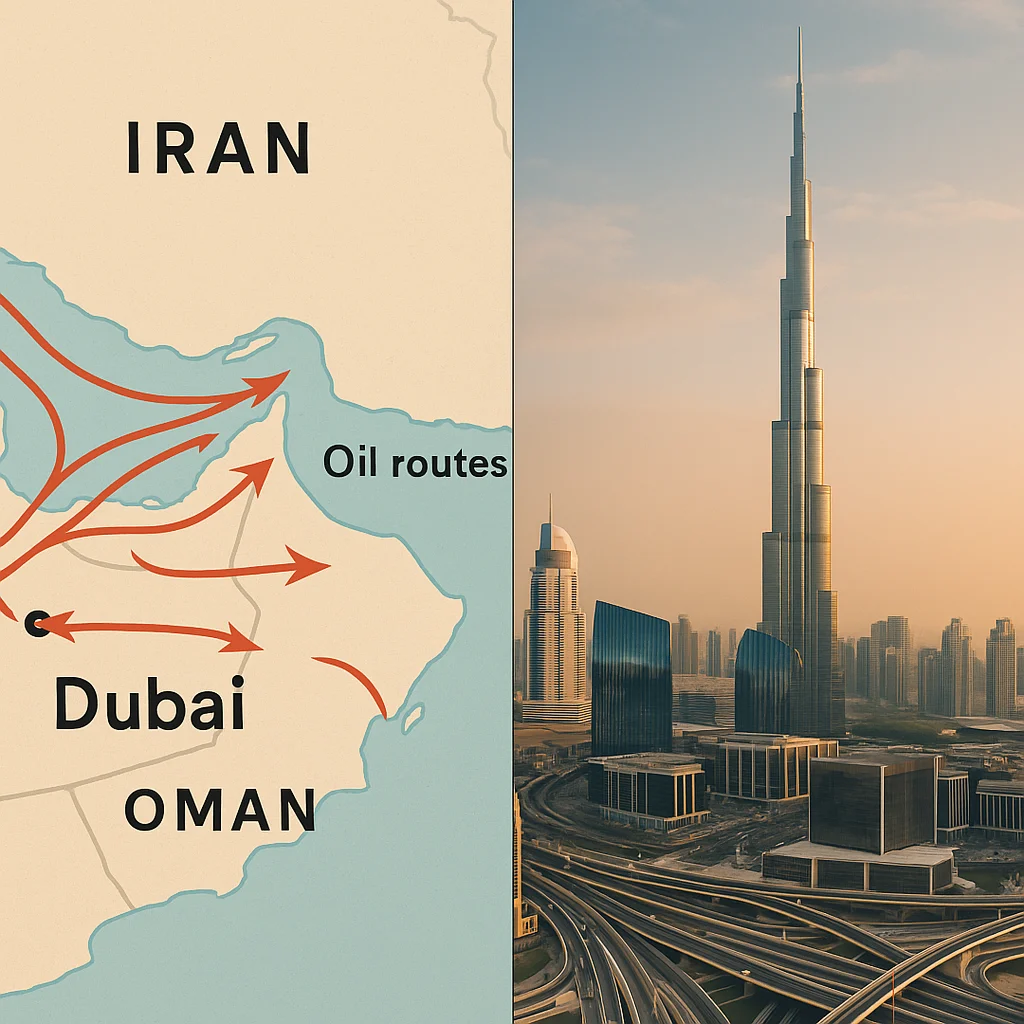
The 33-km-wide Strait of Hormuz handles 20 million oil barrels daily—20% of global consumption and 30% of LNG shipments. This narrow chokepoint between Iran and Oman is the only route for Persian Gulf oil giants like Saudi Arabia, UAE, and Qatar to reach global markets. Key facts:
- Asia’s Dependency: 84% of Hormuz oil flows to China, India, Japan, and South Korea.
- UAE’s Exposure: 75% of UAE oil exports traverse Hormuz, despite the Fujairah Pipeline bypass (capacity: 1.8M bpd).
- Iran’s Trump Card: Closure threats could spike oil to $150/barrel, triggering global inflation.
Dubai Real Estate: Conflict Pressures vs. Safe-Haven Surge
Short-Term Volatility
- Construction Costs: A 10% oil price surge adds ~7% to building material expenses, squeezing developer margins.
- Investor Hesitation: Off-plan sales in peripheral areas (e.g., Dubai South) face delays as buyers prioritize prime assets.
- Stock Market Jitters: Dubai Financial Market dipped 1.9% post-US-Iran strikes, though Emaar Properties rebounded 2.8% within days.
Luxury Market Resilience
- HNWI Influx: Palm Jumeirah villas surged 38% YoY as Iranian, Russian, and European buyers relocate assets.
- Tokenized Boom: DLD’s tokenized properties sold out in 1:58 minutes with 10,700+ global investors queued.
- Currency Advantages: GBP/EUR investors save £1.18M on Dh59M villas due to dirham depreciation.
Global Ripple Effects: Regional Comparisons
| Region | Oil Impact | Real Estate Fallout |
|---|---|---|
| China/India | 45-60% imports via Hormuz → Fuel shortages | Capital flight to UAE properties |
| Europe | 15% gas from Qatar → Energy rationing | Luxury buyers accelerate Dubai relocations |
| Gulf States | Limited pipeline backups → Revenue drop | Tourism/real estate investment freeze |
| USA | Minor direct exposure → Gas price spikes | Safe-haven capital flows to Dubai REITs |
Why Dubai Still Wins in Crisis
- Diplomatic Shield: UAE mediation between Iran/US reduces full-scale war risks.
- Strategic Stockpiles: 6-month construction material reserves prevent project halts.
- Diversified Economy: Non-oil sectors (tourism, tech) now drive 52% of UAE GDP, buffering oil shocks.
- Tax-Free Haven: 0% income tax and golden visas attract wealth fleeing instability.
Investor Strategies: Navigating Uncertainty
- Target Prime Assets:
- Focus on Palm Jumeirah, Downtown Dubai, or branded residences (e.g., Bugatti/Bulgari).
- These areas command 69% premiums and resist downturns.
- Avoid Speculative Plays:
- Off-plan projects face 15% price corrections per Fitch; prefer ready units.
- Leverage Digital Tools:
- Use DLD’s tokenized platforms (e.g., PRYPCO Mint) for fractional ownership.
- Hedge Oil Risks:
- If Brent exceeds $100, invest in REITs with inflation-linked leases.
Long-Term Outlook: Dubai’s Calculated Bet
- 2025-2026: 210,000 new units may trigger 15% price corrections in mid-market segments.
- 2027-2030: Diplomatic stability could cement Dubai as the top global wealth hub, with prime assets appreciating 12-15% annually.
- Wildcard: A prolonged Hormuz closure (>30 days) risks global recession, slashing luxury demand 110.
“Dubai thrives on others’ crises. Every regional conflict redirects capital here. Hormuz volatility is no exception.”
— Zhann Jochinke, Property Monitor
Investor FAQ: Strait of Hormuz & Real Estate
Q: Should I pause Dubai investments during Hormuz tensions?
→ No. Target prime areas—crises accelerate luxury demand and currency discounts.
Q: Which sectors are most vulnerable?
→ Off-plan projects and affordable housing; luxury and commercial assets are resilient.
Q: How would a blockade impact mortgages?
→ UAE banks may tighten lending temporarily; cash buyers gain negotiation leverage.
Q: Can Dubai sustain growth if oil hits $150?
→ Yes. Tourism, trade, and tech diversification insulate its economy.
Bottom Line: Crisis = Opportunity
The Strait of Hormuz remains the world’s most critical oil chokepoint—and its instability fuels Dubai’s evolution as a wealth sanctuary. While oil spikes may pressure mid-market real estate, the luxury sector will keep breaking records as global elites seek safety.
Smart Moves Now:
Sources: Reuters, EIA, Dubai Land Department, Knight Frank.